This year’s winner of the honored homebrew competition is Max Nitsche, a 45‑year‑old family man and AI Program Director from Hørsholm.
With around ten years of homebrewing experience and more than 120–130 batches behind him, Max is a seasoned brewer known for his German brewing roots and his hop‑forward New England Pale Ales. One of them, “Freitag,” also known as “Fredagsslik”, has even become something of a local favorite in certain circles north of Copenhagen.
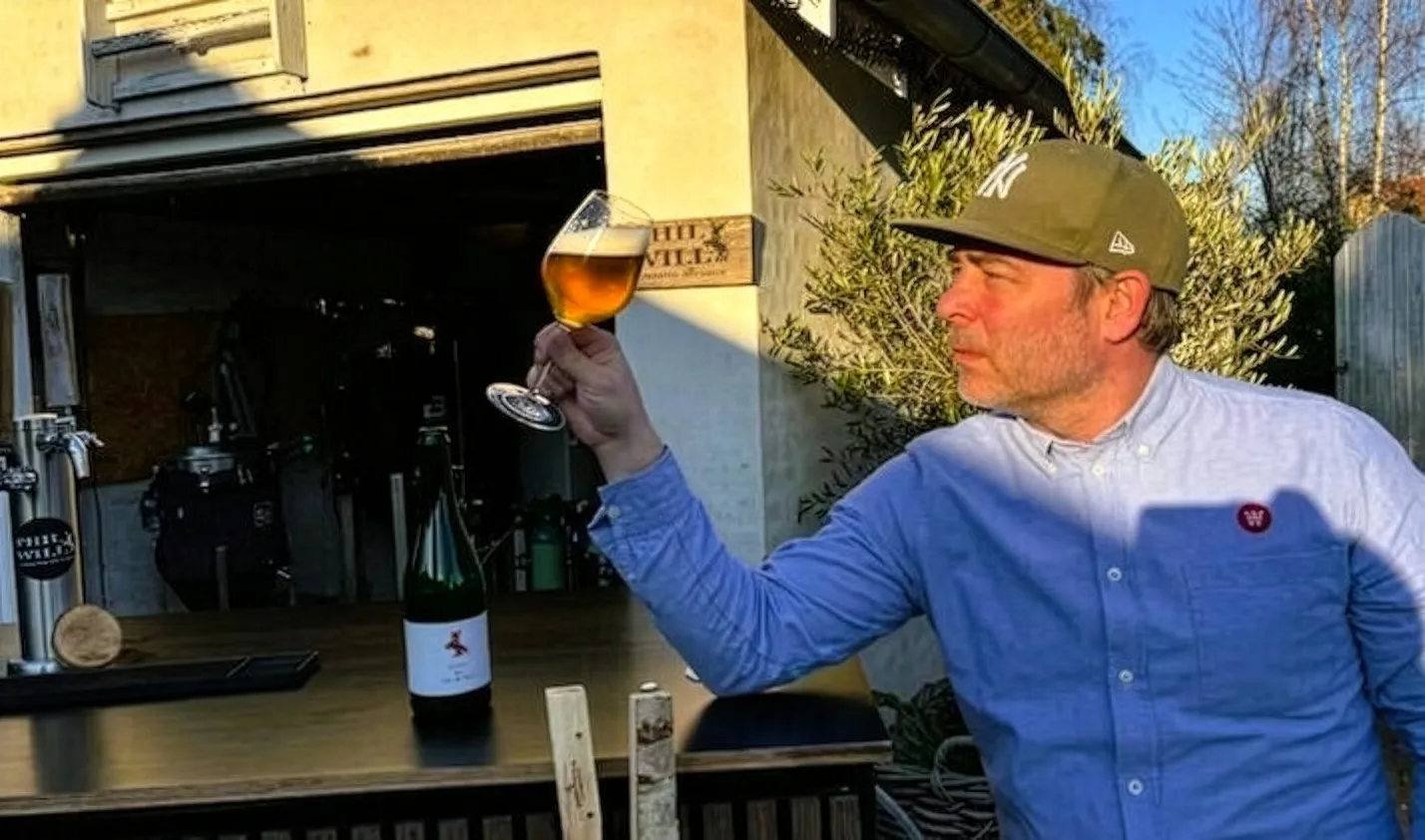
How did you get into homebrewing?
I’m originally from Stuttgart in southern Germany, where beer and also wine isn’t just something you drink; it’s part of the culture you grow up with. When I moved to Denmark in 2011, I suddenly couldn’t find the fresh, classic Hefeweizen I loved back home, so I decided to try brewing it myself. My very first attempt years earlier – a bucket, a kit, and a beer that tasted nothing like what I had hoped for – didn’t exactly set me on fire. But in 2016, after getting a bonus at work, I bought my first real all‑grain setup. That batch turned out surprisingly well, and I even served it at my son’s baptism. From that moment, I was hooked. It also opened my eyes to the whole craft beer movement, which I honestly hadn’t been very aware of before.
Today I brew on an electric HERMS system with three kettles in my garage, stainless steel tanks, temperature‑controlled fermentation, and water filtration. I keep upgrading it piece by piece. It’s still a hobby, but I approach it with the same dedication and curiosity as a professional brewer or beer judge/sommelier. Like many homebrewers, I’ve always had the dream of opening a microbrewery one day.
And now, with Philwill Brew, I’m actively exploring that next step. I’m currently looking for a location in Hørsholm/Rungsted or the surrounding countryside to start a small microbrewery.
Are you drinking all your beer yourself?
Not at all. And honestly, that’s part of the fun. By the time I finish brewing and tasting one beer, I’m already thinking about the next recipe, so all of it ends up with friends and family. Sharing the beer is just as important to me as brewing it.
One year I hosted my own private and authentic (and I have to admit, now somewhat legendary) Oktoberfest at home for my friends and family. We put up big tents, served beer on tap, poured Oktoberfestbier alongside other styles, and set up cornhole and other fun games. There was music, DJ, and everyone showed up in Lederhosen and Dirndls. Ever since, people keep asking when the next Oktoberfest will be. Maybe this year… It’s a great way to bring people together and a perfect excuse to empty a few kegs.
Why did you submit a beer to the homebrewer competition?
First of all, I just love brewing and experimenting with different styles. Over the years I’ve taken part in many Danish homebrewing competitions - including DM (Danske Mesterskaber) and events like Brewers Inc.’s Brewer of the Month. I always enjoy getting honest feedback. It’s a great way to learn, improve, and see whether there’s something new to explore or a new style to master. It also tells me whether my taste palette and interpretation of a style actually resonate with the judges.
And of course, like many homebrewers, I’ve always had the dream of one day opening a small microbrewery. After brewing for so many years, winning a few medals, and getting to know a lot of microbrewers, that idea has become more real. So submitting a beer to the competition felt like a natural step, a way to challenge myself, see where I stand, and take one step closer to that dream.
Alright. Can you introduce us to your winning brew?
The beer is called Saison du Val’de Rød – a little wordplay on Vallerød, the area where I live and brew. It’s inspired by Brasserie Dupont’s classic Saison Dupont. I’m not actually the biggest saison drinker myself, but I’ve brewed the style a few times because I really admire the balance and elegance in a Saison Dupont. For me, that beer is the benchmark for the entire style.
My version is light in color, a classic golden yellow, and sits at around 7.2% ABV. It’s crisp, clean, and fairly dry. I use some sugar during fermentation to help build the alcohol and allow the yeast to ferment fully, creating that dry, refreshing finish I love in a saison.
A lot of brewers like to add extra ingredients to saisons, but for me the ideal expression is still the simple, balanced farmhouse ale profile you get when Saison Dupont or other traditional farmhouse beers are served in a wine or champagne bottle. That purity and restraint is exactly what I tried to capture with Saison du Val’de Rød.
What can visitors expect from you at this year’s MBCC?
Mikkeller Beer Celebration Copenhagen is such a unique gathering. It brings together brewers and serious beer fans who are always looking for new flavor experiences. Because of that, I don’t think you should bring something ordinary. My personal brewing style is strongly influenced by southern Germany: beers that are crisp, balanced, and easy to drink. For me, beer is about sitting together, talking, and enjoying the moment without exhausting your palate. That philosophy is always in the back of my mind when I brew.
Of course, I’ll be presenting the saison, Saison du Val’de Rød, but I haven’t fully decided what else to bring. I’m working on a few ideas that reflect my style, maybe something more hop‑forward, and the direction I want to take Philwill Brew. I guess you’ll have to wait and see.

.webp)